
TOPICS
Speaker Connecting Platform
C&M Speakers
SEARCH
)
- Name
- Jaeshik Choi
- Company
- KAIST
- Position
- Professor
- Topics
- AI, Robotics, Autonomous Driving
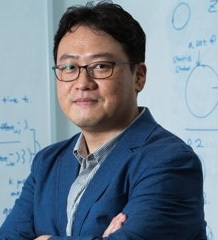
Jaeshik Choi is a Professor in the School of Electrical Engineering at KAIST (Korea Advanced Institute of Science and Technology). He is widely recognized as a leading next-generation scholar in South Korea, specializing in Artificial Intelligence (AI), Robotics, and Autonomous Systems. His research focuses on manifesting AI not merely as an abstract algorithm or software but as an embodied intelligence capable of functioning in the physical world.
Professor Choi’s core expertise lies in Reinforcement Learning (RL), robot intelligence, and autonomous agents. He possesses a distinct competitive edge in developing technologies that enable machines to learn, reason, and act independently within uncertain and complex real-world environments. This field of "Physical AI"—where AI transcends simulations to operate in the tangible world—has direct implications for industries such as autonomous driving, robotics, national defense, manufacturing, and logistics.
Academic & Industrial Impact:
Professor Choi balances rigorous theoretical foundations with practical applications. He focuses on validating cutting-edge AI theories by implementing them into actual robotic systems, consistently publishing his results in top-tier international conferences and journals. Simultaneously, he has transformed his laboratory into an outpost for technological innovation through collaborative research with industry, technology transfers, and startup partnerships.
Strategic Vision & Public Communication:
From a policy and industrial perspective, Professor Choi views AI as a critical component of national competitiveness and strategic assets. He provides a balanced, reality-based perspective on major global issues, including the U.S.-China tech hegemony, AI regulation and safety, and the deployment of autonomous systems in defense and security.
His core message—that the future of AI is a competition of data, physical environments, and system integration rather than just algorithm speed—offers vital insights to industry leaders and policymakers.
Furthermore, he is known for his exceptional ability to communicate with the public. He explains complex AI concepts clearly, avoiding hyperbole or fear-mongering, while precisely identifying the structural changes and limitations brought by technology. Through his work, he helps the public recognize AI not as a vague future technology, but as an ongoing force that is already reshaping power dynamics and global order.
- Company : C&M PLUS
- CEO : Hyunsu LEE
- Address : Complex A-619, Doosan The Land Park, 161-8, Magokjungang-ro, Gangseo-gu, Seoul 07788 Korea
- TEL : +82-2-6959-8355
- BIZ NO : 105-88-06480
- EMAIL : cnm@cnmplus.com
- Copyright(c) C&M PLUS. All Rights Reserved.
