
TOPICS
Speaker Connecting Platform
C&M Speakers
SEARCH
)
- Name
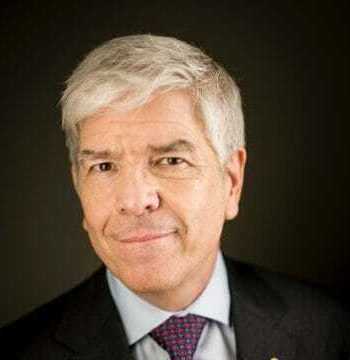
- Paul Romer
- Company
- Carroll School of Management, Boston College
- Position
- University Professor
- Topics
- The Nobel Memorial Prize in Economic Sciences, Endogenous Growth Theory
Paul Romer: Nobel Laureate and Pioneer of Endogenous Growth Theory
Paul Romer is a distinguished American economist, policy entrepreneur, and Professor of Economics at Boston College. Best known as the former Chief Economist of the World Bank, he was co-awarded the 2018 Nobel Memorial Prize in Economic Sciences (alongside William Nordhaus) for his groundbreaking work on Endogenous Growth Theory. He is widely recognized as one of the most influential economists of the 21st century.
Throughout his illustrious career, Dr. Romer has held research positions at the National Bureau of Economic Research (NBER), the Stanford Center for International Development, the Stanford Institute for Economic Policy Research, and the Hoover Institution. He has also served as a Fellow of the American Academy of Arts and Sciences and the Center for Global Development.
Since the early 1980s, Dr. Romer has revolutionized our understanding of economic growth. Unlike traditional models that viewed technological innovation as an "exogenous" (external) byproduct of scientific progress, he demonstrated that innovation is an "endogenous" (internal) product of the market economy. His research reveals how new technologies are intentionally created through profit-driven R&D and how these innovations drive sustained economic growth on both national and global scales.
His work further underscores the necessity of well-designed government policies—including public investment in R&D and intellectual property rights that balance rewarding creators with broad accessibility—to foster continuous technological breakthroughs. The modern field of Endogenous Growth Theory, which examines the vital link between the production of ideas and economic expansion, is built upon Dr. Romer’s foundational research.
By illuminating how human economic activity generates the progress necessary for sustained prosperity, Paul Romer has provided a roadmap for governments and corporations to drive long-term growth through strategic investment and institutional design.
- Company : C&M PLUS
- CEO : Hyunsu LEE
- Address : Complex A-619, Doosan The Land Park, 161-8, Magokjungang-ro, Gangseo-gu, Seoul 07788 Korea
- TEL : +82-2-6959-8355
- BIZ NO : 105-88-06480
- EMAIL : cnm@cnmplus.com
- Copyright(c) C&M PLUS. All Rights Reserved.
